
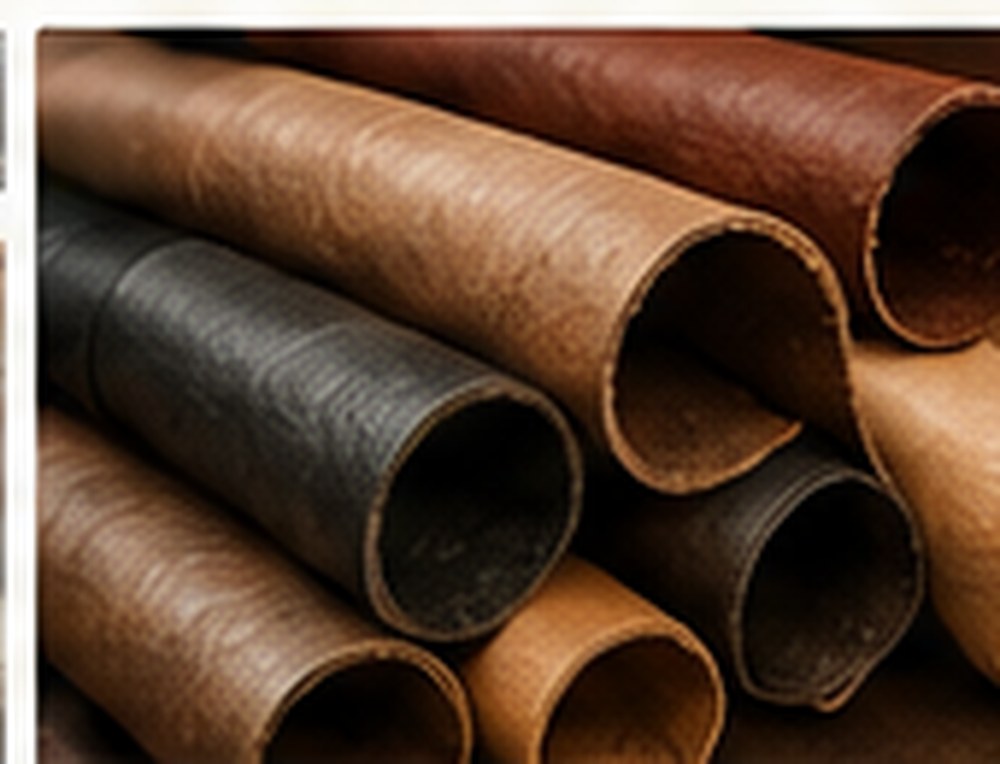
Nappa often describes a soft, supple finished leather rather than one universal material standard. Buyers commissioning bags, garments, upholstery or premium accessories should specify its measurable characteristics instead of assuming every ‘nappa’ quotation describes the same leather.
Find suppliers for this topic
No published supplier profile is currently matched to this specific guide. If your leather business provides these products or services, make your capabilities easier for trade buyers to discover.
Identify the actual material behind the trade name
Ask for species, cut and finish, tannage where relevant, thickness and finishing system. A fine-grain lambskin article may behave very differently from a heavier soft bovine leather. Clarify whether the description denotes a material grade, supplier range or customer-specific finish. Supplier descriptions should identify whether skins are whole, splits or composite constructions.
Specify hand feel and drape
Provide a physical control sample for softness, spring, flex and surface feel. Garment panels need drape and movement; bags may need more structure; upholstery uses larger matched panels. Record acceptable thickness tolerances and any reinforcement or lamination. Do not assume that the softest sample produces the strongest seams or the best performance in use.
Set appearance and durability expectations
Specify sheen, grain visibility, colour matching, rub fastness and finish resistance relevant to the final product. Assess dark and light colourways separately if necessary. Ask which methods were used for any reported tests, and whether results relate to the production finish. Consider cleaning, dye migration and exposure to adhesives or hardware in the intended assembly.
Compare wholesale purchasing options
Establish hide sizes and cutting yield for the actual patterns, price basis, stock availability, dye-lot minimum and factory capacity. Ask whether there is a stable repeat article or a one-off stock lot. Reorder certainty matters to brands more than a single attractive sample; document how any substituted tannage or finish will be approved.
Approve production-ready samples
Use representative pieces to test stitching, folding, skiving, edge finishing and glue application. Photograph defects and mark sample zones before returning them. Confirm care labels, claim substantiation and any market-specific testing with the product manufacturer. Keep the approved material and the batch documentation together.
Supplier enquiry checklist
- Confirm the exact leather article and intended end use.
- Request representative swatches and production-lot identification.
- Agree grading, measurements, acceptable variation and rejection criteria.
- Compare minimums, lead times, packing and delivery terms on the same basis.
- Identify the manufacturer, converter, trader or sourcing agent actually responsible.
Find trade suppliers and related guidance
Research supplier roles through LeatherTradeHub’s directory, or submit a leather sourcing request describing your specification and destination. Supplier claims and product compliance must be checked independently before ordering.
Editorial guidance for business buyers, reviewed 31 October 2026. Requirements vary by material, processing stage and destination market.
LEATHERTRADEHUB · EDITORIAL REFERENCE
Cite this guide
LeatherTradeHub (2026) Nappa Leather Suppliers: Soft Finished Leather for Wholesale Buyers. Available at: https://leathertradehub.com/leather-supply-tanneries/nappa-leather-suppliers-wholesale/ (Accessed: 18 November 2026).
Canonical source: https://leathertradehub.com/leather-supply-tanneries/nappa-leather-suppliers-wholesale/
Source information and limitations: Editorial standards · Research and citation policy. Please verify current regulations and technical standards with their original publishers.